weddingindex.org
The most advanced and deep-diving website review service for businesses in the wedding industry
★ Get your own unique FAQ + Selling Points on your profile page
★ be seen by 1000s of daily visitors and win new business
weddingindex.org Miniblog
Why Are So Many Foreign Couples Suddenly Fleeing to Scotland to Marry?
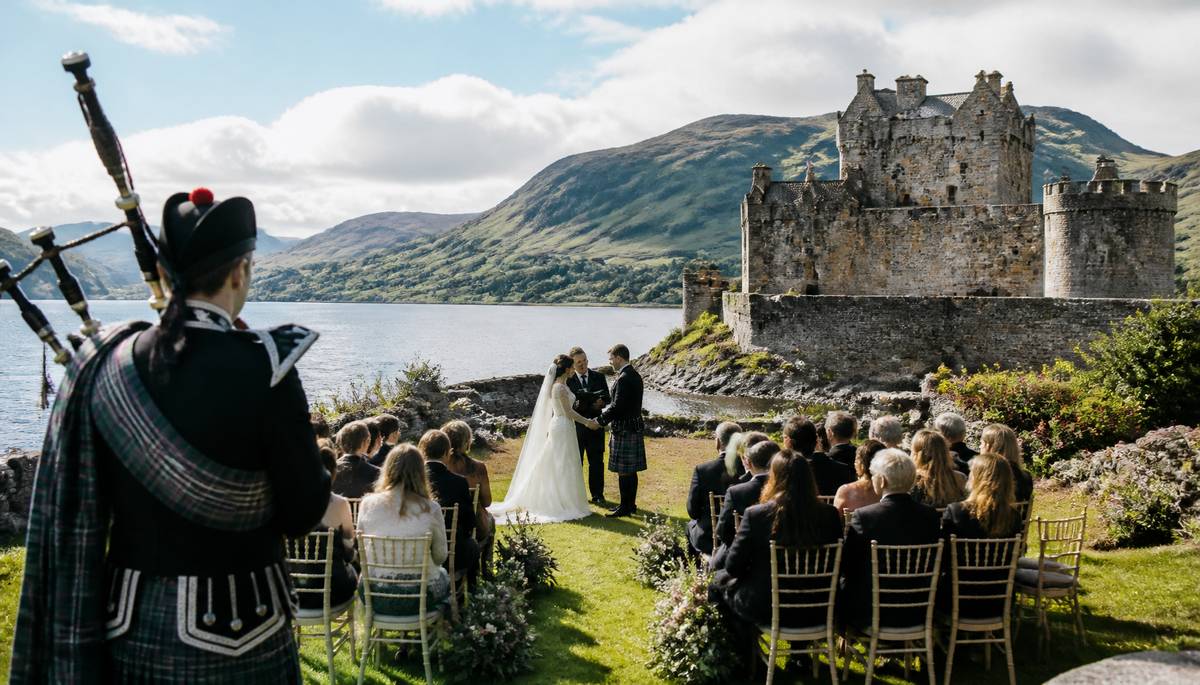 Scotland has quietly become the place to run away to, only with better catering and more paperwork. In 2025, 6,596 of Scotland’s 27,191 weddings involved couples who lived elsewhere. That is nearly one in four. And more than half of those destination weddings happened in Gretna Green alone.
Part of the pull is obvious. If you can get married in a castle, with hills lurking in the background and bagpipes making everyone feel unexpectedly emotional, why would you choose a beige function suite off a ring road? American couple Hayden Kuhn and Savannah Aanderud did exactly that, booking a castle near Edinburgh after spotting the idea online. They had never been to Scotland before. It still won.
Then there is the myth, the history, the slightly damp romance of it all. Gretna Green still trades on its reputation as the place lovers fled to after England tightened marriage laws in 1754. For some couples, like Patryk and Angelika Klimorowski from north-west England, that sense of tradition matters as much as the scenery.
Others come because Scotland is part of their own story. Chihon Ley Polanco from Chile and Ana-Maria Bucatari from Moldova met in Edinburgh, fell in love later, and married on Arran with vows translated for relatives in Spanish and Russian.
So why Scotland? History, landscape, strong wedding infrastructure, and the chance to turn a ceremony into an adventure. Also: castles. Obviously.
Posted on 5 October 2026
The Real Star Of An Outdoor Wedding Is The Light
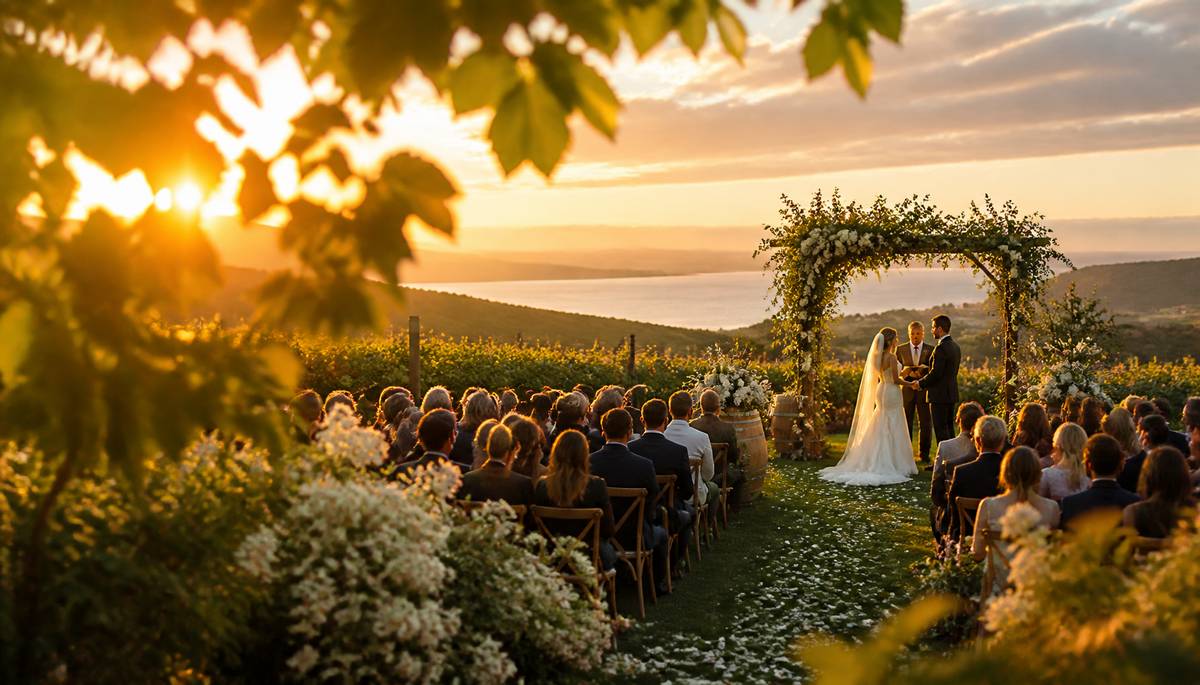 An outdoor wedding gets its first break from the scenery, but the thing that really steals the picture is the light. Sun through leaves, late afternoon over a vineyard, the soft glare off water at a beach — that’s the stuff guests remember, even when they don’t know they’re remembering it.
That’s part of the pull. A garden already carries colour and charm. A vineyard brings long views and often a handsome building for the reception. Beaches give you drama without trying too hard, and woodland can make the whole affair feel private, almost whispered. The setting does some of the heavy lifting, so you do not have to force every detail.
It also changes the mood. Outdoor weddings can feel easier, less stiff. Guests drift between spaces, children can roam a little, and the photographs tend to get a better deal from daylight and shifting backdrops.
Nature throws in its own extras: old trees, wildflowers, water, seasonal colour, a sky that won’t sit still. Indoors, you’d pay dearly to fake that.
Of course, the weather is the uninvited guest with a strong personality. Sensible couples plan for cover, shade, heaters, solid flooring and an indoor fallback. They also think about access, especially over sand, grass or rough ground.
A good outdoor venue is not just a place to hold a wedding. It becomes part of the story.
Posted on 26 September 2026
Confusing Booking Pages Are Quietly Costing Vendors Their Best Clients
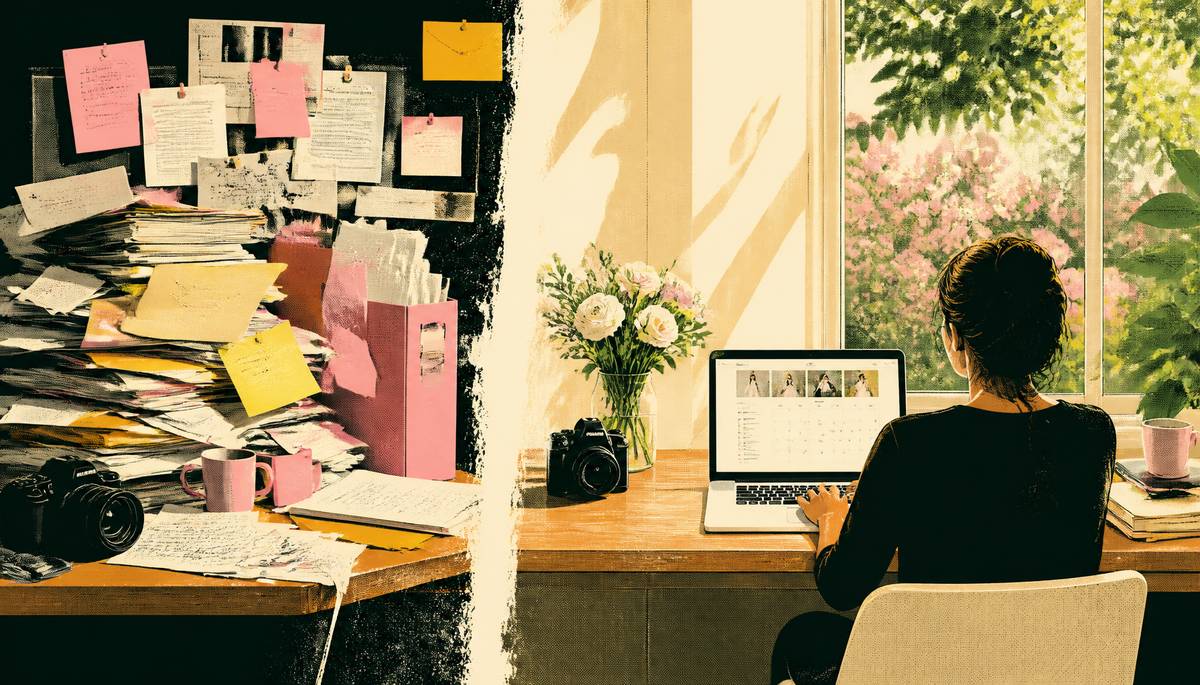 The finest wedding suppliers are often defeated not by the work itself, but by the dreary obstacle course wrapped around it. A planner wants to plan. A photographer wants to shoot. Instead, far too many are stuck herding emails, chasing invoices and trying to remember which platform contains which crucial detail.
That muddle is expensive. Research found 52% of service businesses use four or more tools to run day-to-day operations, and a quarter spend more than 16 hours a week on admin. Two working days, gone. Not on clients. Not on growth. Just on keeping the plates spinning.
Meanwhile, the customer sees the front end of this chaos: a baffling booking page, unclear services, too many steps, too much faff. And off they go. In the same survey, 78% of service businesses said clients hesitate when the offer feels confusing, while 75% said a polished, clearly organised website boosts enquiries and bookings.
The vendors doing better tend to make life boring in exactly the right places. They keep enquiries, scheduling, payments and messages in one system. Nearly 43% of businesses that consolidate this way spend fewer than five hours a week on admin, which leaves actual time for marketing, service and sanity.
It turns out simplicity is not cosmetic. It is operational. And clients can feel the difference almost immediately.
Posted on 21 September 2026
Why Did The Knot's Brand-New Loan Crash To 50 Cents?
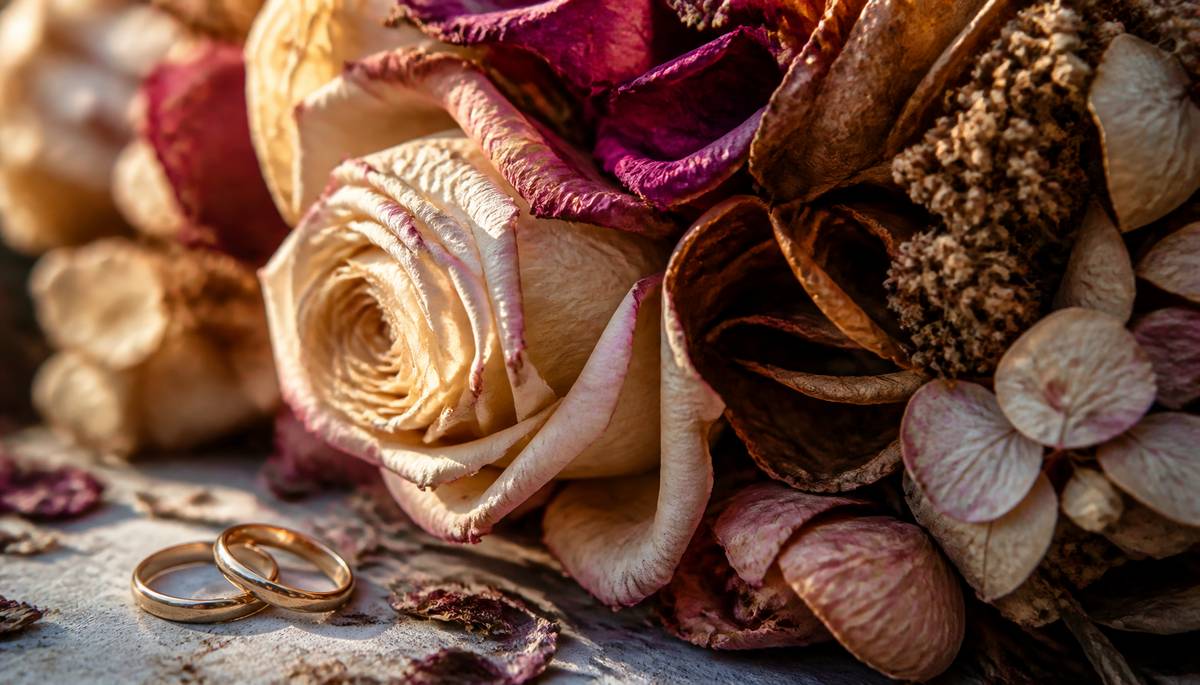 A month after The Knot Worldwide refinanced its $670 million loan at par, the debt is reportedly changing hands at roughly 50 cents on the dollar. That is not ordinary post-deal wobble. It is the sort of move that tells you lenders are no longer arguing about upside; they are worrying about survival.
Yes, loan prices can lurch around on thin trading. Leveraged debt is not a model of calm liquidity, and a couple of trades do not make a full market. Even so, this slide stands out because the refinancing was so recent and because it pushed the maturity out to 2030, buying the company another two and a half years.
The business itself helps explain the nerves. The Knot, created through the 2018 combination of WeddingWire and XO Group, has been grappling with softer revenue and higher vendor churn. Moody’s also flagged a more structural problem: traffic pressure as users drift from traditional search to AI-generated answers, which can siphon clicks from platforms built on discovery.
Management is pushing back. The company says couple engagement is improving, marketplace traffic is up 20% year to date, and unique booking opportunities for vendors rose 9% in August from a year earlier.
Still, investors noticed the refinancing came with a 5.25-point spread over the benchmark and a payment-in-kind option, allowing interest to be added to the loan rather than paid in cash. In credit markets, that kind of flexibility often calms no one. Posted on 18 September 2026
How A Few Tiny Details Can Reveal A Couple Better Than A Thousand Monograms
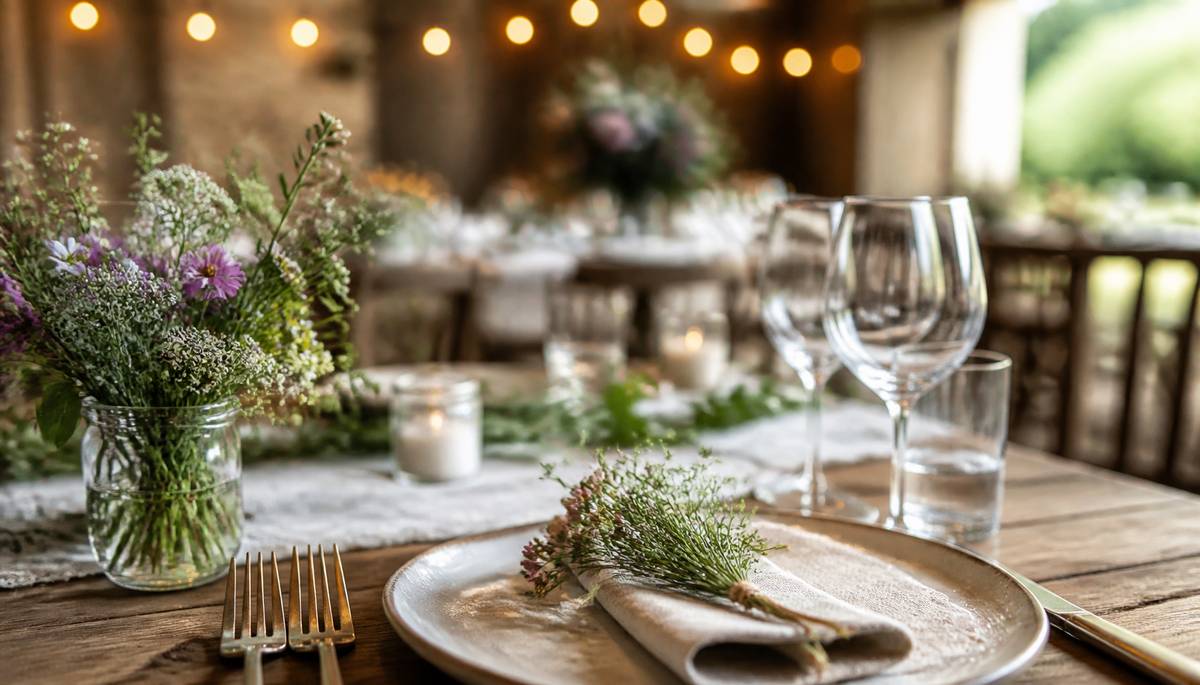 A wedding says more in passing than in proclamation. Not through a blizzard of matching initials, but in the quieter clues: the room chosen, the music played, the supper served, the way two people decide to stand up and be seen.
A hotel ballroom may suit one pair down to the ground. Another will look far more convincing in a garden, a converted barn, a restaurant, or some modest place in the country. The point is not grandeur. It is ease. Guests can tell, almost at once, when a setting fits.
The same goes for decoration. Favourite colours, flowers, photographs, books and music can slip into invitations, tables and the general atmosphere without making a song and dance of themselves. A handful of well-judged details often reveals more than a hundred branded napkins.
Food is another honest language. Dishes tied to family, to travels shared, or simply to what the couple truly likes will always feel more persuasive than a dutiful plate of anonymous chicken under cream sauce.
And then there is the shape of the day itself: a live band instead of a disco, acoustic music, games, an unexpected first dance, personal vows, readings that mean something. Tradition is not the villain. Keep what matters. Leave what does not. The best weddings are rarely the strangest. They are the ones that make people think, with a little smile: yes, that is exactly them.
Posted on 13 September 2026
Why Do Ordinary Wedding Venues Look Luxurious After Dark?
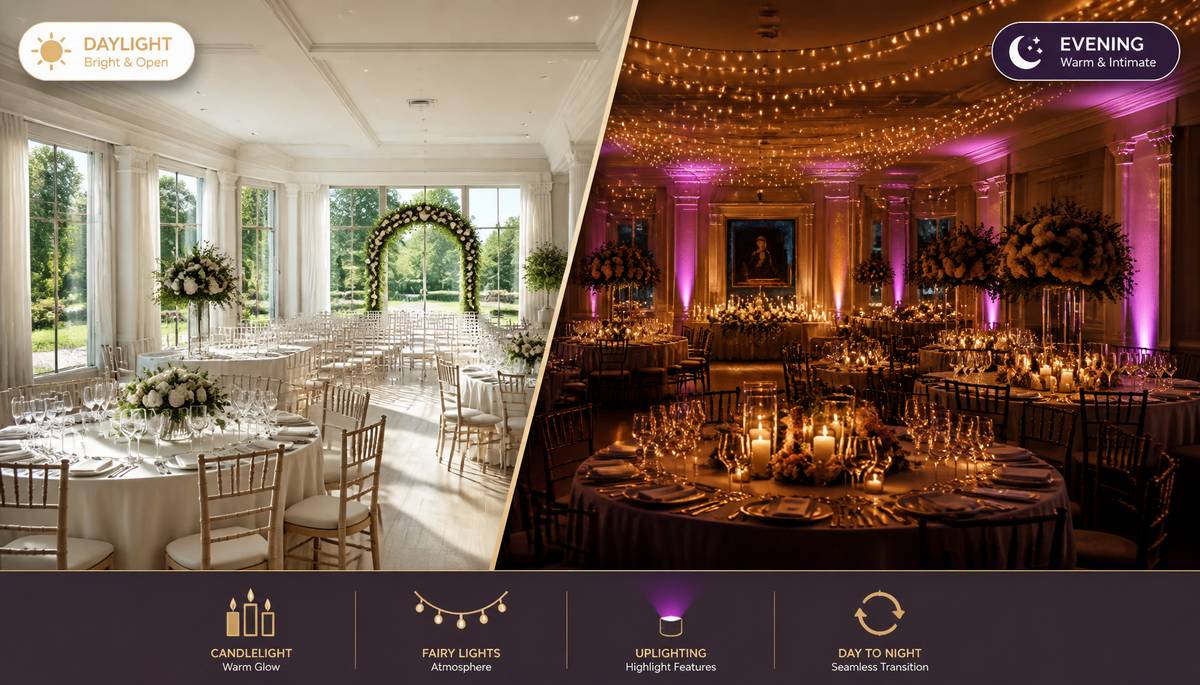 A wedding venue at noon can look like a conference centre with ambition. That same room at 8pm? Suddenly it’s giving country house, private members’ club, minor royalty. The difference is usually lighting.
Daylight does the heavy lifting early on. Big windows, garden spaces and a ceremony spot that catches the sun can make a venue feel open, flattering and far more expensive than it is, especially in photographs. Smart couples don’t just plan where the chairs go; they think about where the light lands.
Then evening shows up and starts minding everybody’s business. Candles bring warmth and make tables feel layered rather than flat, especially if they’re grouped at different heights. If open flames are off limits, LED versions can still create that soft, intimate effect without upsetting the venue manager.
Fairy lights help too, but only if you don’t expect them to light the whole place like a supermarket. Their real job is atmosphere: across ceilings, around beams, through trees, or in gloomy corners that need a little encouragement.
For the big switch, uplighting is the closer. Set around walls, pillars and architectural details, it pulls features out of the dark and can tie in with flowers and décor through colour. The best setups shift through the day: bright for the ceremony, softer for dinner, moodier for dancing. That’s how an ordinary room starts flirting with luxury.
Posted on 5 September 2026
The Secret Perk Of A Thursday Wedding: Better Venues, Less Waiting
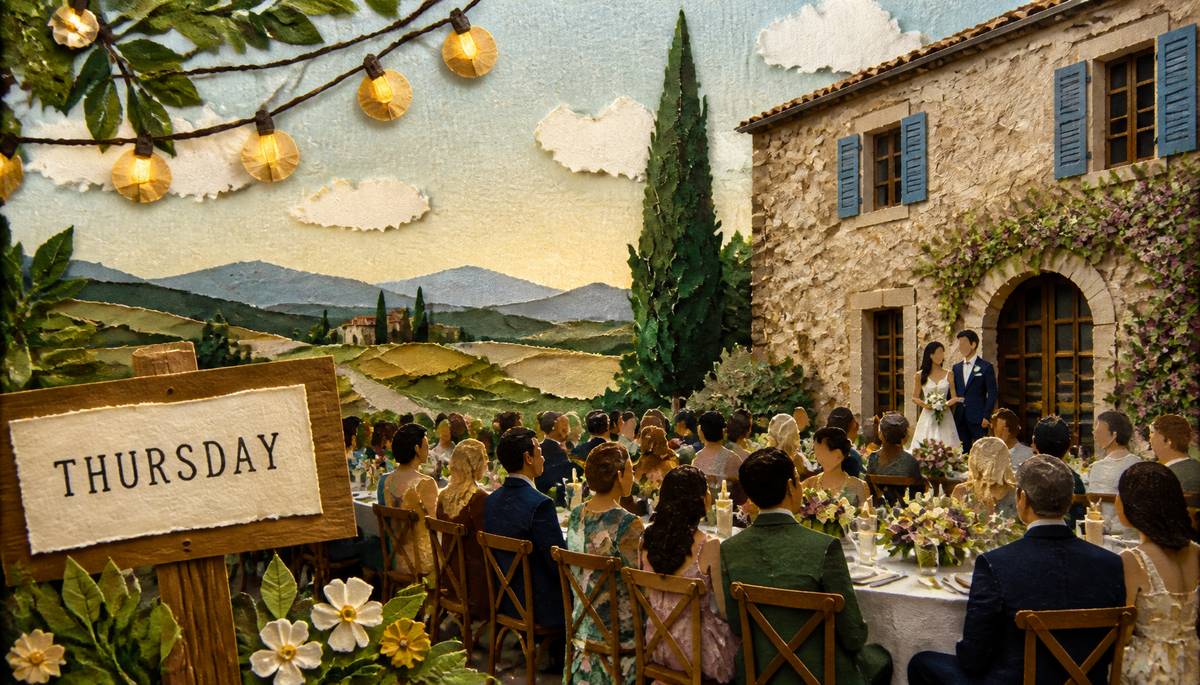 Saturday weddings have somehow become the office default setting of matrimony, but Thursday is sitting there quietly offering actual benefits. The biggest one is simple: choice. If you’ve fallen for a venue that is booked solid on weekends, a Thursday can get you through the door months sooner, instead of forcing you to wait another year or settle for somewhere that feels merely fine.
There is often a money angle too, which is not exactly sexy but is extremely real. Some venues and suppliers charge less during the week, and that can mean a smaller overall bill or room in the budget for the bits people actually remember, like good food, strong photography and a dance floor that doesn’t feel emotionally neglected.
A weekday wedding can also shift the mood in a good way. It tends to be less about performing “big Saturday wedding” and more about gathering the people you really want there. Smaller guest lists often suit this format especially well, and the whole thing can feel more intimate and less stiff.
Of course, it’s not perfect. Guests may need annual leave, childcare and possibly an extra night’s accommodation if they’re travelling. That means plenty of notice is essential. Still, there’s nothing magically more romantic about a Saturday. If Thursday gets you the better venue, less waiting and better value, that’s a pretty convincing love story. Posted on 31 August 2026
Why Are Brides Abandoning Modern Wedding Dresses?
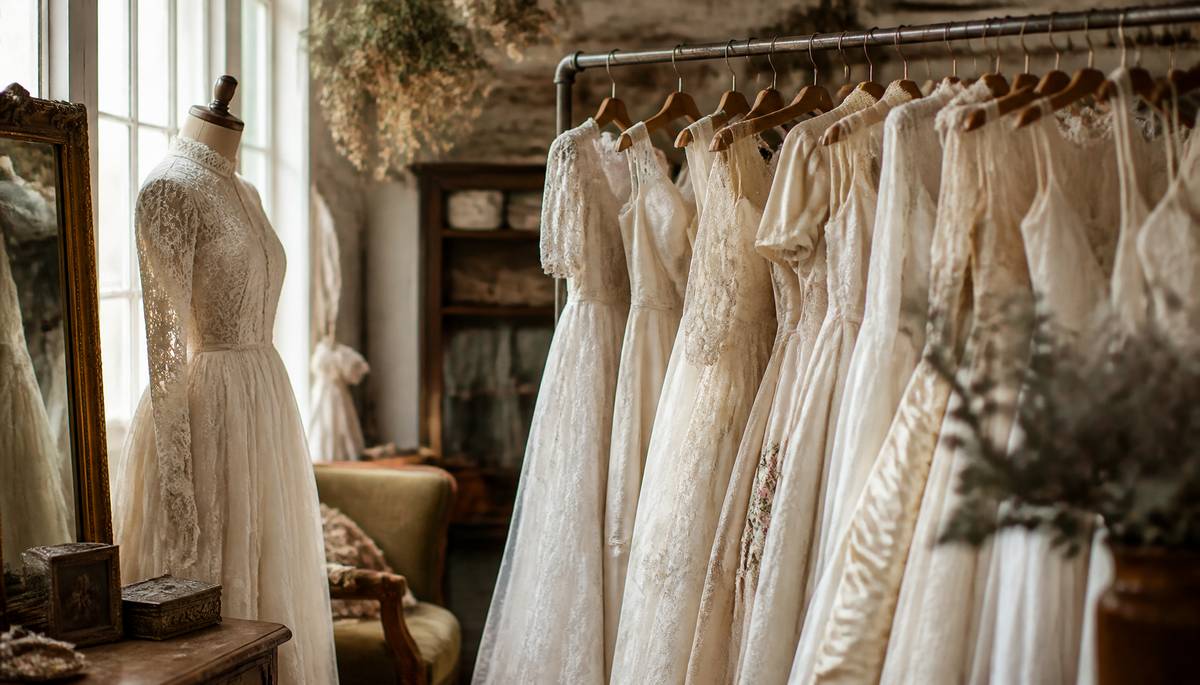 The white satin conveyor belt is losing a few passengers. More brides are turning away from modern wedding dresses and choosing vintage gowns instead, not out of nostalgia alone, but because they want something with personality.
One bride put it simply: many weddings now blur into one another. The dress, the photos, the styling — elegant, yes, but often strangely uniform. A vintage gown interrupts that sameness. It brings quirks, detail and a sense that the bride has chosen a dress, rather than merely selected an option.
That matters. Weddings are highly personal occasions, yet the bridal industry can make them feel oddly standardised. Older dresses offer an antidote. The cut may be unusual, the lace finer, the silhouette less predictable. Even the signs of age can add charm rather than detract from it.
There is also a pleasing practicality to the shift. Vintage can be a way to find better craftsmanship, and sometimes better value, than a brand-new dress designed to be worn once and packed away forever. It also appeals to brides who want their wedding to feel more individual and less like a polished copy of someone else’s.
Not every bride wants retro romance, of course. But for those who do, vintage is not a compromise. It is often the point.
Posted on 24 August 2026
Personalisation, Not Tradition, Is Driving The New Wedding Colour Boom
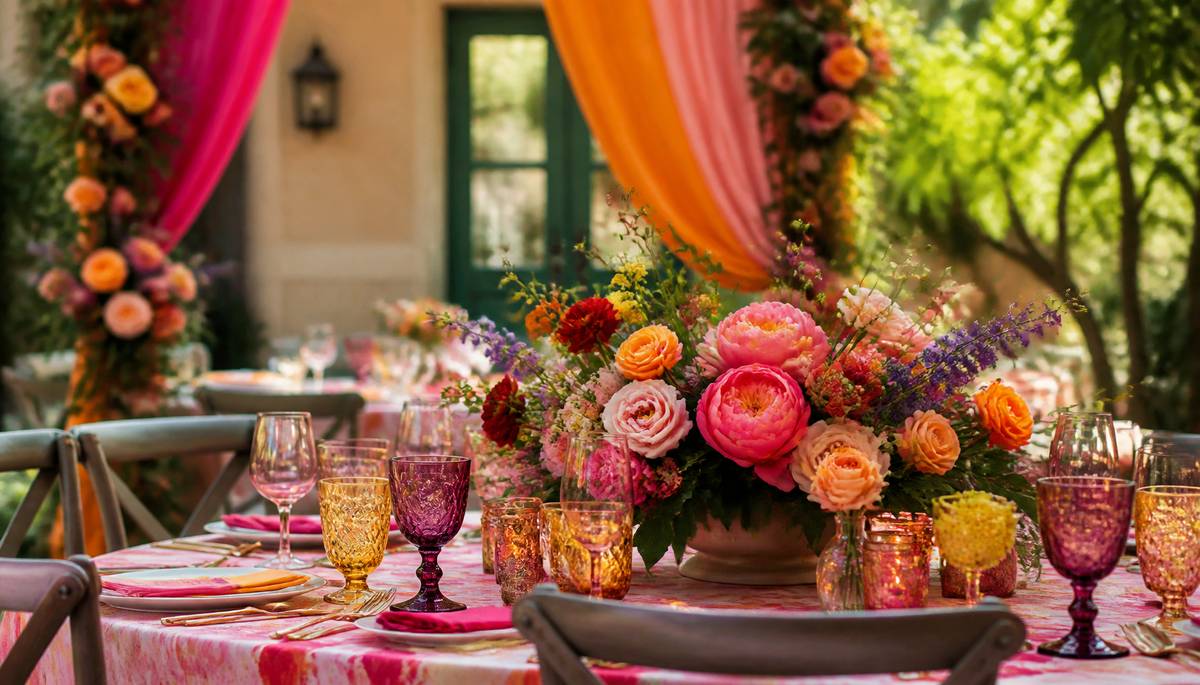 The old wedding gospel once preached in cream, ivory and a sort of blameless beige, as if matrimony itself might be invalidated by a cheerful shade. That doctrine still has its followers. Yet many couples now commit a most agreeable rebellion: they choose colour.
The change is plain enough. Flowers, once confined to white roses and dutiful greenery, now arrive in orange, pink, yellow, purple and red. Seasonal stems help the whole affair feel less stage-managed and more alive, while repeating those tones across the venue gives cohesion without stiffness.
The reception has joined the uprising. Coloured glassware, patterned linens, candles, menus and place settings can wake a neutral room with very little effort. One need not paint every surface like a fairground. A few deliberate details often do more than a hundred timid ones.
Bridal parties are changing as well. Bridesmaids need no longer resemble a regiment. Different shades within one palette can sit together beautifully, while ties, pocket squares, bouquets and accessories supply further contrast.
What drives this is not fashion for its own sake, but personal choice. Couples are selecting colours that reflect character, culture, season and setting, rather than obeying a tired template. An all-white wedding can still be elegant. It is simply no longer the default, nor should it be.
Posted on 17 August 2026
Nearly 1,000 Goals Later, Ronaldo Just Chose A Different Milestone
 Cristiano Ronaldo has spent two decades collecting goals like other people collect parking tickets, so it says something that his latest landmark has nothing to do with a net.
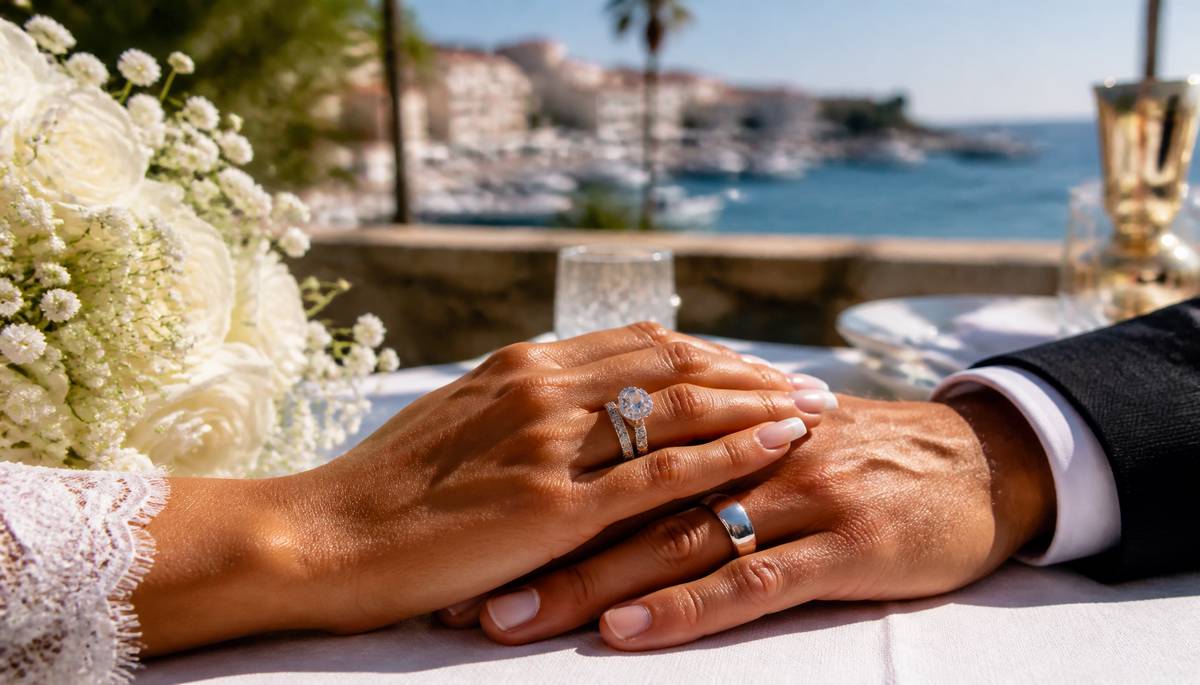
The 41-year-old has married Georgina Rodríguez in a civil ceremony in Portugal, making official a relationship that began in Madrid back in 2016. The couple shared the news with an Instagram photo of their wedding rings, quiet and polished, the kind of announcement that does not need much dressing up.
They wed in Cascais, the seaside town just west of Lisbon, with their five children there for the occasion. It happened only four days before Al Nassr begin the 2026-27 Saudi Pro League season, which feels very Ronaldo: one major life event neatly tucked in before the next professional assignment.
His football numbers are still absurd. Ronaldo is closing in on 1,000 career goals across spells with Sporting, Manchester United, Real Madrid, Juventus, Al Nassr and Portugal. He has also just played in his sixth World Cup, matching Lionel Messi for the most appearances in the men’s finals.
But this moment lands differently. After years of records, trophies and relentless motion, Ronaldo has chosen a milestone that is personal rather than statistical. No scoreboard. No stopwatch. Just a wedding ring, five children watching, and a life that finally paused long enough to say yes.
Posted on 13 August 2026
Can A Luxury Wedding Ever Be Green? The Vermont Answer
 A luxury wedding can never quite wash itself clean. It is, after all, a large and largely optional burst of consumption dressed in silk and peonies. Yet Vermont is making a decent case for the greener version of extravagance.
The state hosted more than 4,500 weddings last year, with spending hitting $181 million. Fine for hotels, caterers and florists; less fine for the planet. One estimate puts the average wedding at 400 pounds of rubbish and 63 tonnes of carbon emissions, with guest travel doing much of the damage.
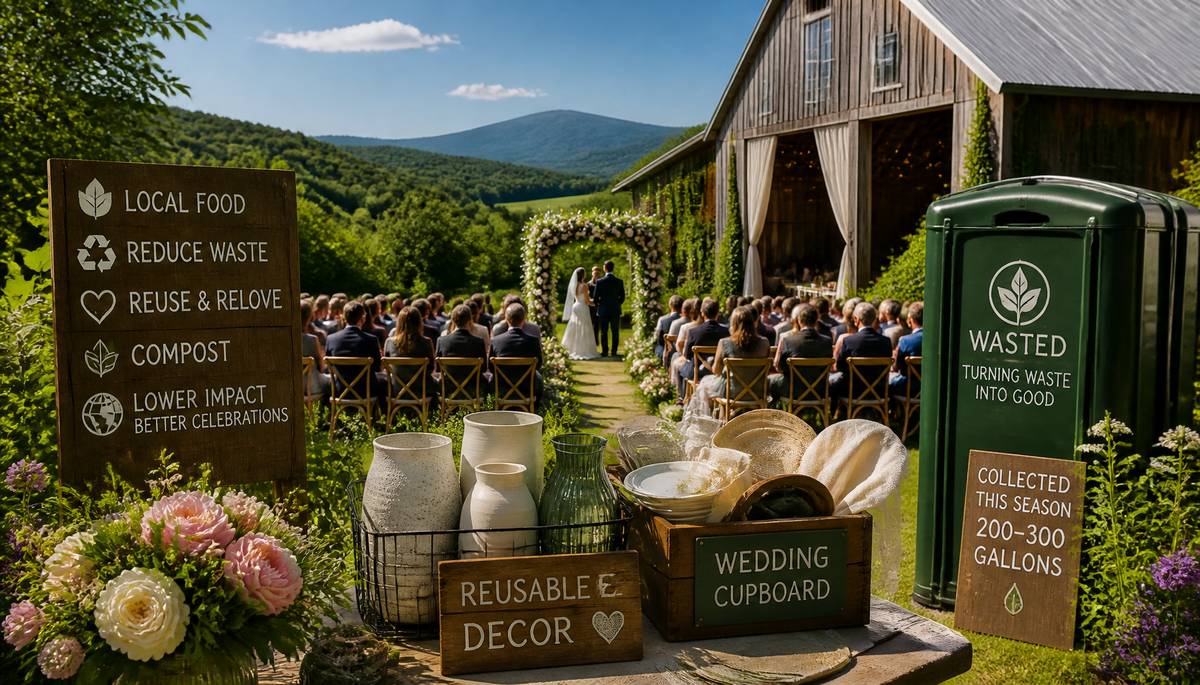
So the smarter vendors are attacking the waste where it hides. At Wild Sugar Homestead in Newbury, sustainability starts with the ground itself: native trees, fruiting shrubs and perennial planting shaped by permaculture principles. The venue also uses off-grid loos from Burlington firm Wasted, which turn urine into fertiliser rather than sending it into septic systems or waterways. In one season alone, the site collected 200 to 300 gallons.
Other fixes are less headline-grabbing but just as useful. A shared wedding cupboard lets couples reuse decorations and supplies. Florist Jessica Schievella swaps plastic-heavy floral foam for reusable chicken wire set in ceramic vessels, then takes back vases, composts flowers or donates them.
Luxury planner Jaclyn Watson points to local food as another sensible shift: serve Vermont beef at a Vermont wedding, and the money stays closer to home. Not perfect, then. Just better. Which, for weddings, is a start.
Posted on 12 August 2026
The Most Treasured Wedding Photos Are the Ones Nobody Planned
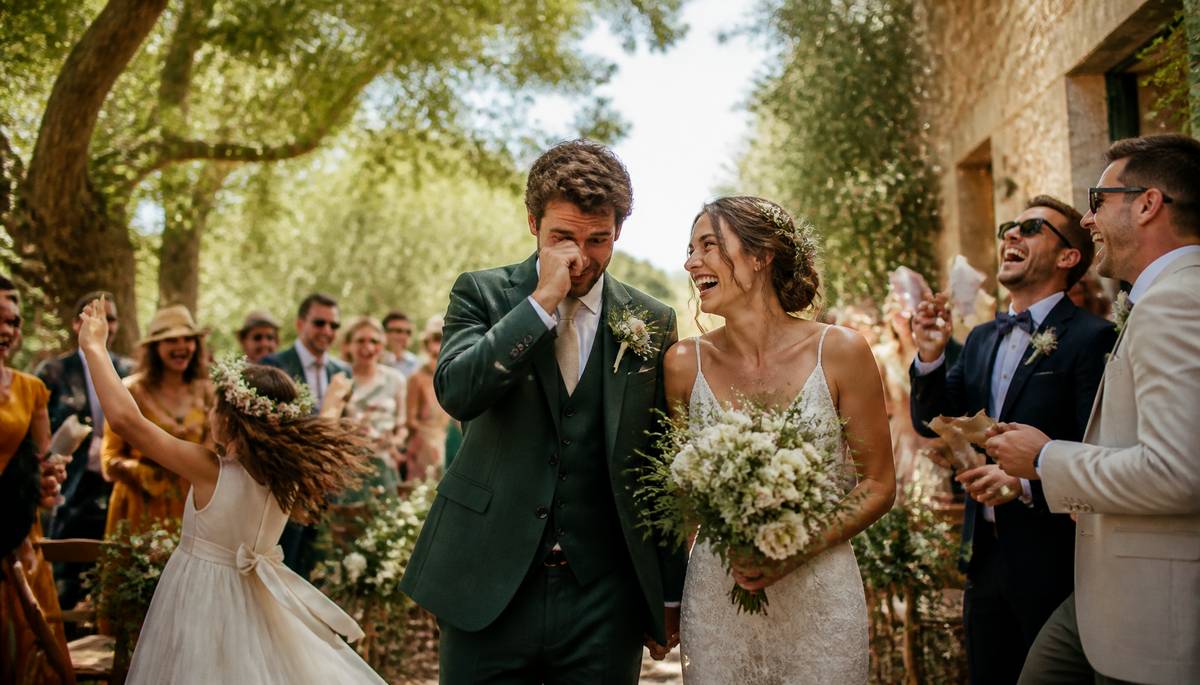 The photos people frame for years are rarely the perfectly lined-up ones. They are the split-second images nobody could have organised: a father blinking back tears, a flower girl doing her own chaotic thing, two friends laughing so hard during the speeches they nearly fold in half.
That is why wedding photography has shifted towards a more documentary style. Instead of constantly interrupting the day with instructions, many photographers now hang back and pay attention. They catch the quick glance across the room, the hug that lasts a beat longer than expected, the kids racing around the chairs while the grown-ups pretend not to notice.
It is not just about aesthetics. It changes the mood. Couples spend less time being arranged and more time actually at their wedding, which is a lovely concept if you think about it. Guests relax too, and relaxed people look like themselves rather than slightly worried versions of themselves.
Formal group shots have not vanished, and they probably should not. Most weddings still include family portraits and a few couple photos. The difference is balance. Those planned images now sit alongside a fuller, messier, more honest record of the day.
Better cameras and more natural-light shooting help photographers work quietly, almost invisibly. Years later, that subtle approach often pays off. The pictures that hit hardest are usually the ones nobody saw coming.
Posted on 3 August 2026
Big Weddings Can Be Weirdly Lonely-Small Ones Fix That
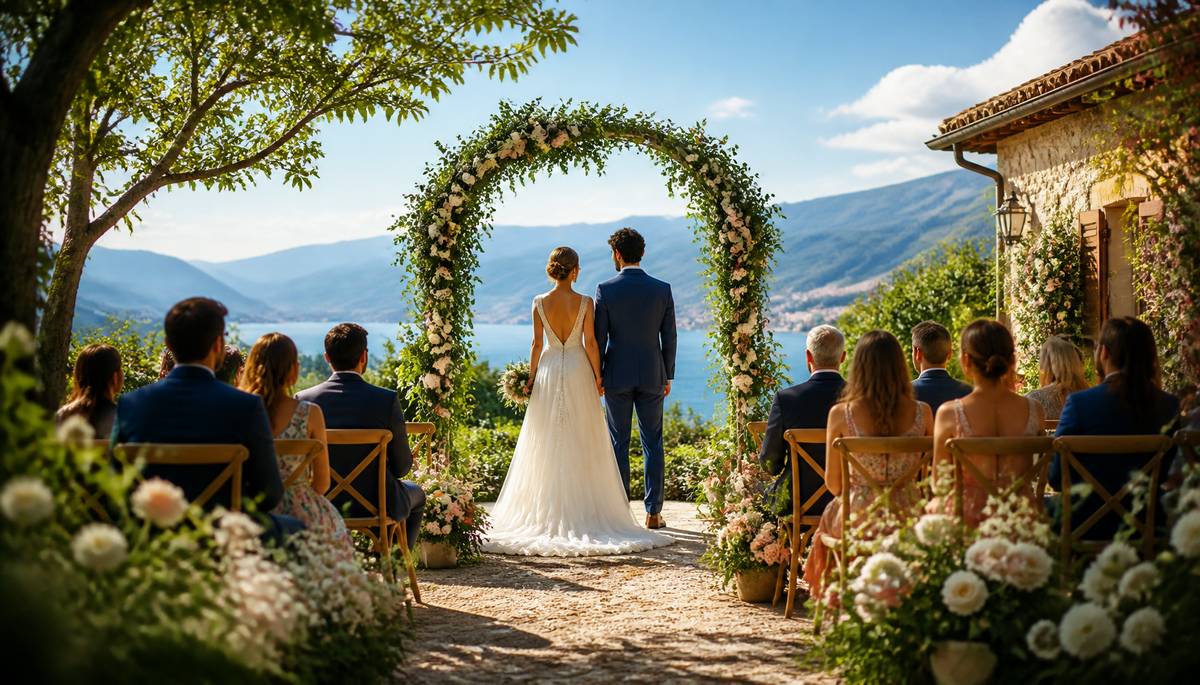 Big weddings are supposed to feel like a grand declaration of love. Quite often, they feel like hosting a small civil emergency in formalwear.
That is one reason smaller weddings keep winning hearts, and the trend is still going strong through 2026. Money matters, of course. With many households watching major spending more carefully, cutting the guest list can feel less like sacrifice and more like common sense. Instead of paying to feed a distant cousin’s colleague’s plus-one, couples are putting that money into things they will actually remember: a striking venue, superb food, a photographer who catches real moments, or simply a day with room to breathe.
There is also the matter of comfort. In tighter economic times, a lavish celebration can feel a bit too much, like turning up to a village fête in a gold carriage. A smaller wedding avoids the performance of impressing everyone and leaves space for what weddings are meant to contain: affection, conversation and the odd happy tear.
It also changes the shape of the day. Fewer guests means fewer endless greetings and more proper time with each person there. Close friends and family tend to feel less like an audience and more like part of the occasion.
That is the real appeal. A wedding does not become meaningful because it is enormous. It becomes meaningful because it feels true to the couple.
Posted on 29 July 2026
Perfection Is Out, Authenticity Is Taking Over Weddings
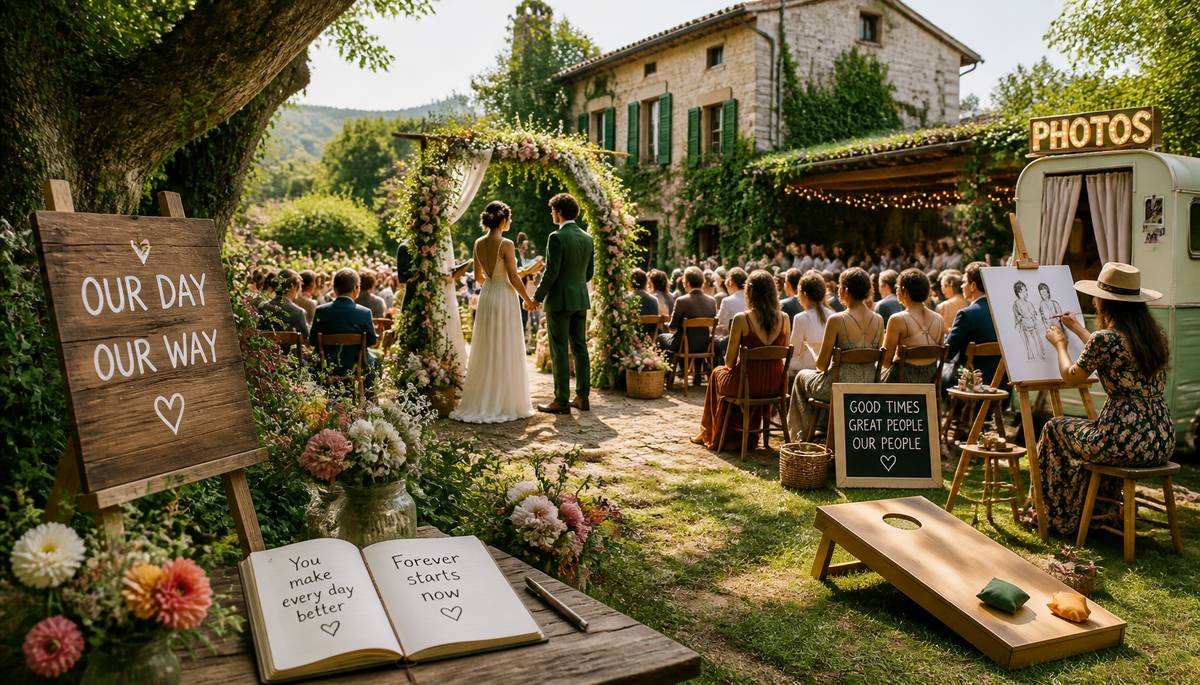 A wedding used to come with an invisible clipboard. Tick the flowers, tick the cake, tick the bit where everyone politely pretends they enjoy sugared almonds. Now, more couples are asking a better question: does any of this actually feel like us?
That shift is showing up everywhere. Handwritten vows are a big one, and for good reason. They let couples swap stock phrasing for real memories, private jokes, promises that sound like something an actual human being would say. Often, those are the moments people remember most.
The venue matters too, but not just for parking and capacity. Couples are choosing places with emotional weight: a family home, a beloved garden, a country house, even the spot where the relationship began. It gives the day a sense of context, not just decoration.
Ceremonies are loosening up as well. Personal readings, cultural customs, family traditions and symbolic rituals are being folded in to reflect what matters to the couple, rather than what a template says should happen next.
Even the entertainment is getting more specific. Yes, there are still bands and DJs, but also lawn games, live illustrators, photo booths and playlists built around shared favourites. Guests feel less like spectators and more like part of the story.
The result is a wedding that may be less polished in places, but far more memorable. Perfect is losing ground. Personal is winning.
Posted on 24 July 2026
Sustainability Became The Wedding Industry's Sharpest Sales Tool
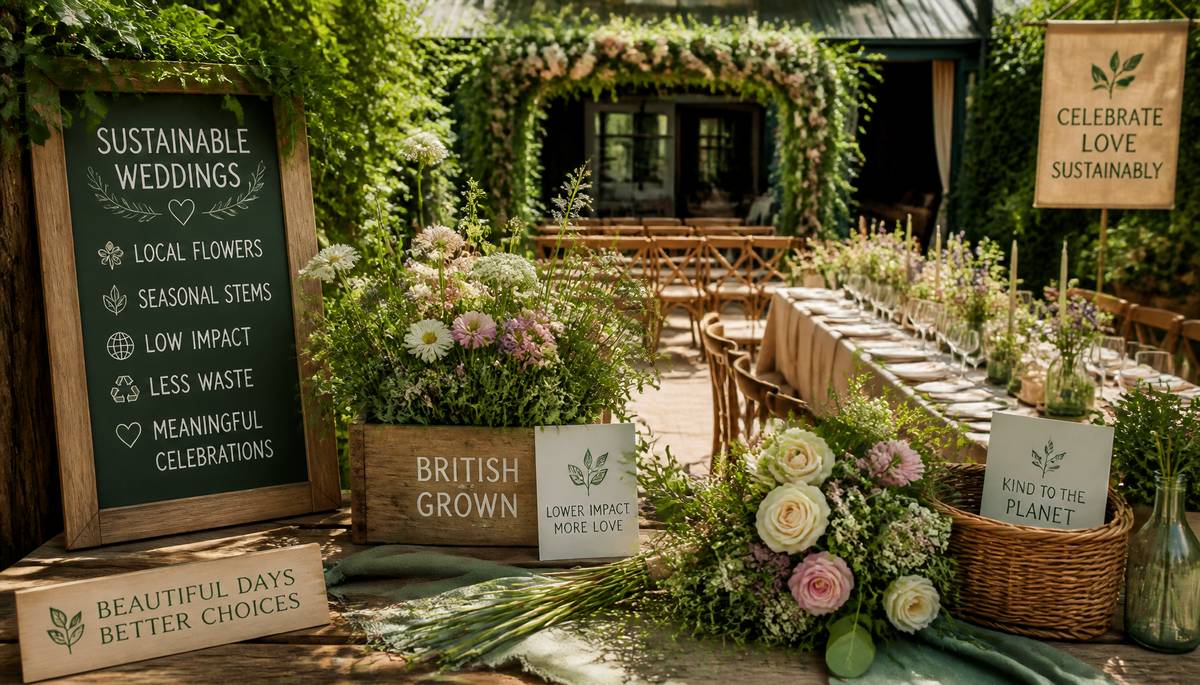 Sustainability has stopped being the moral side salad of weddings. It is now closer to the main course, and it is selling.
The UK wedding market is worth about £14.7 billion a year, yet most suppliers are small businesses working on narrow margins. That makes shifting demand hard to ignore. Recent figures show 83% of couples make at least one sustainable choice, while 81% now consider green options in their plans, up from 70% the year before. Search behaviour is even louder: searches for “eco-friendly wedding venue” jumped 200% in just three months.
That matters because couples are not browsing for fun. They are filtering. If a florist cannot explain seasonal sourcing, or a venue has nothing credible to say on waste or energy, they risk disappearing from the shortlist. Revenue follows visibility. Eco-focused wedding suppliers reportedly saw revenues rise by 30% in 2023.
The strongest examples are practical, not preachy. Cumberland Flower Farm doubled turnover after building its offer around low-impact styling. Featherstone Flowers cut flower-related emissions dramatically by using only British-grown stems and backed it up with reporting. Pappley Walled Garden made sustainability central to its brand and drew couples actively seeking lower-impact celebrations.
The lesson is simple. Prove your claims, explain them clearly, and build them into the business rather than bolt them on. Fewer people may be getting married, but those who do are spending with purpose. That changes everything.
Posted on 15 July 2026
GLP-1s Just Broke The Old Bridal Timeline
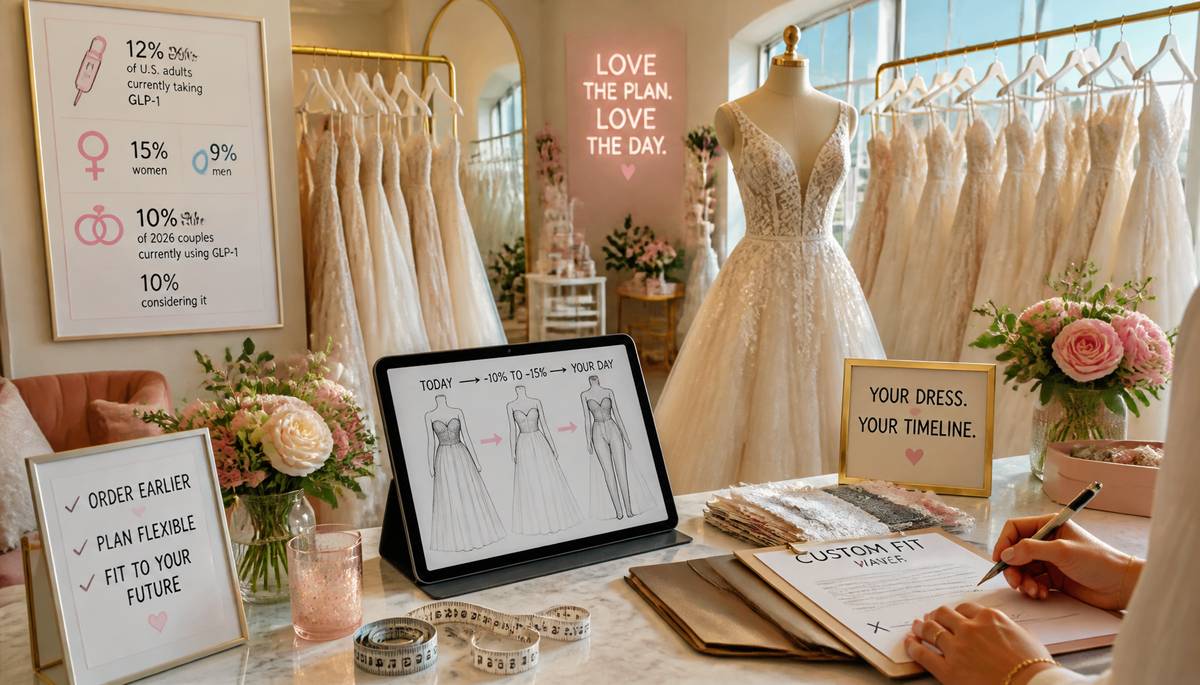 The old bridal calendar used to be almost liturgical: pick a gown nine to 12 months out, schedule the fittings, trust the body to stay politely where it was. GLP-1 drugs have scrambled that order.
Bridal shops are now working around faster, less predictable changes in size as more brides lose significant weight before the ceremony. David’s Bridal says rush orders have risen by 50% in the past year, and one in five of its bridal customers now buys a dress six months before the wedding or even later. That is a sharp shift for an industry built on long lead times and careful measurements.
The numbers help explain the upheaval. A late-2025 KFF poll found 12% of American adults are currently taking a GLP-1 medication, while 18% said they had used one at some point. Women were more likely than men to be taking them, 15% versus 9%. Zola found 10% of couples planning 2026 weddings are currently using a GLP-1, with another 10% considering it before the day itself.
These medicines often lead to weight loss of roughly 10% to 15%, and sometimes close to 20%, according to the Mayo Clinic. So boutiques are carrying more stock, speeding up orders, doing more alterations and, in some cases, asking brides to sign waivers if they order a gown smaller than their current measurements.
It turns out the wedding dress is no longer just being fitted to a body. It is being fitted to a forecast.
Posted on 10 July 2026
Why Was A 1970 Chevelle The Wildest Prize At The Wedding Of The Year?
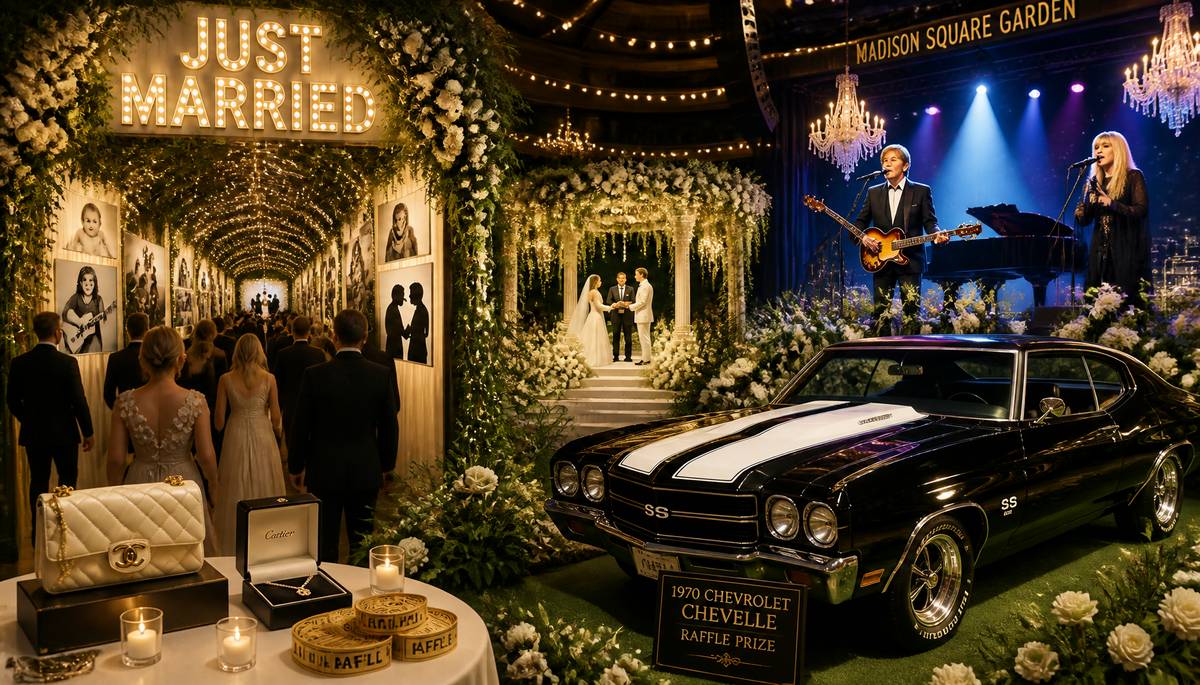 At a wedding built for spectacle, the oddest and most memorable prize was not a designer bag but a 1970 Chevrolet Chevelle. The reason was simple enough: it was the same model Taylor Swift and Travis Kelce rode in on their first date, which turned a raffle item into a piece of shared mythology.
Guests who later described the July 3 celebration at Madison Square Garden painted it as grand yet unexpectedly personal. A giant “Just Married” sign announced what had been carefully kept quiet. Inside, attendees passed through a tunnel of photographs tracing the couple from childhood to courtship before reaching a garden-themed ceremony space.
The wedding itself appears to have been heavy on feeling rather than formula. Adam Sandler officiated. Austin Swift served as “Man of Honour” and Jason Kelce as best man. Both bride and groom wore white Dior Haute Couture, and guests said their self-written vows drew tears, especially from Kelce. Swift even sang part of hers.
Then came the reception. Paul McCartney and Stevie Nicks performed, while the food reportedly came from favourite New York restaurants. Games earned guests raffle tickets, leading to prizes that ranged from luxury accessories to that Chevelle. In a room full of famous faces, it was a very old car that best captured the story being celebrated.
Posted on 6 July 2026
Inside Taylor Swift and Travis Kelce’s Madison Square Garden Wedding Weekend
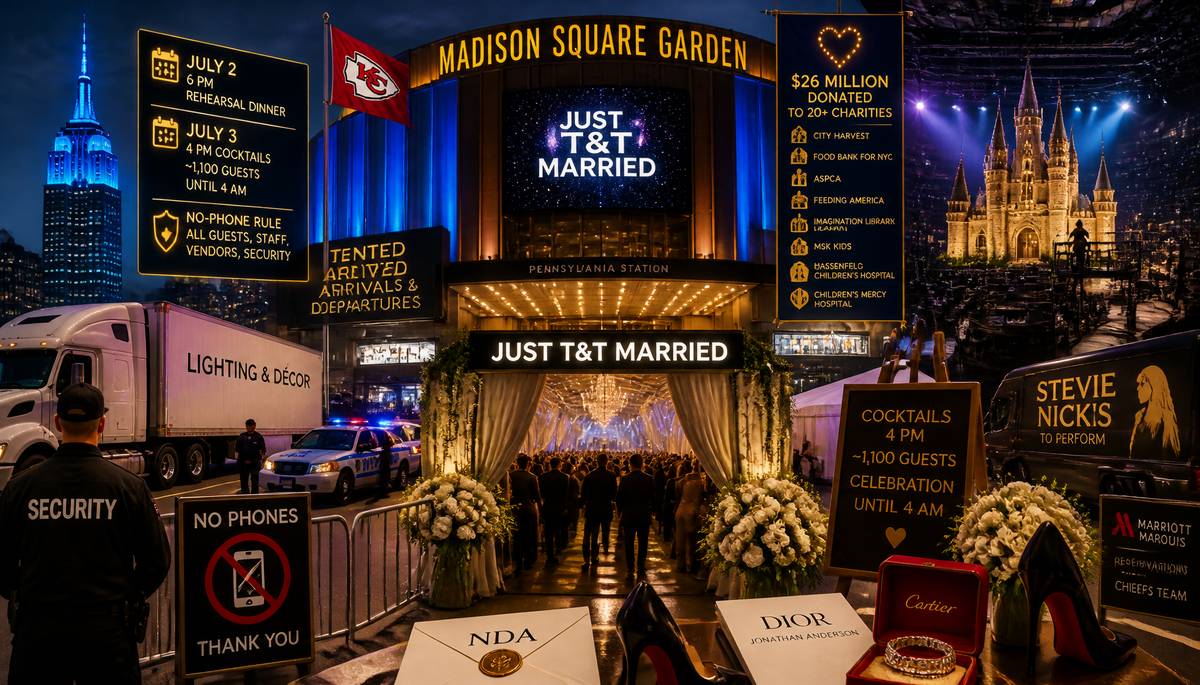 New York spent days behaving like a city with a secret too large to keep: Taylor Swift and Travis Kelce married at Madison Square Garden on July 3 after weeks of mounting signs.
The schedule became clear first. A 100-person event was set for July 2 at 6 p.m., widely treated as a rehearsal dinner, followed by the main celebration on July 3: cocktails at 4 p.m., roughly 1,000 to 1,100 guests, and festivities running until 4 a.m. Electronic invitations included NDAs, and both nights operated under a strict no-phone rule for guests, staff, vendors, and security. Tents shielded arrivals and departures.
The scale was unmistakable. A permit sought street closures around the Garden from July 2 into July 4, with a tent and crowd plans filed for the area. NYPD and Amtrak police were briefed because Penn Station sits beneath the venue. Chiefs players reportedly booked rooms at the Marriott Marquis.
On July 2, the couple also gave $26 million to at least 20 charities, including City Harvest, Food Bank For NYC, ASPCA, Feeding America, Dolly Parton’s Imagination Library, MSK Kids, Hassenfeld Children’s Hospital, and Children’s Mercy Hospital.
Signs of spectacle multiplied: trucks delivered lighting and décor on June 29, production activity was spotted in Pennsylvania, and reports described a castle being built inside MSG. Stevie Nicks was expected to perform. By evening, arena screens read JUST T&T MARRIED, the Empire State Building glowed blue, and confirmation followed: Dior couture by Jonathan Anderson, Louboutins, Cartier, Austin Swift as Man of Honor, Jason Kelce as Best Man, and Adam Sandler officiating. Posted on 4 July 2026
The Rising Cost of Saying Yes
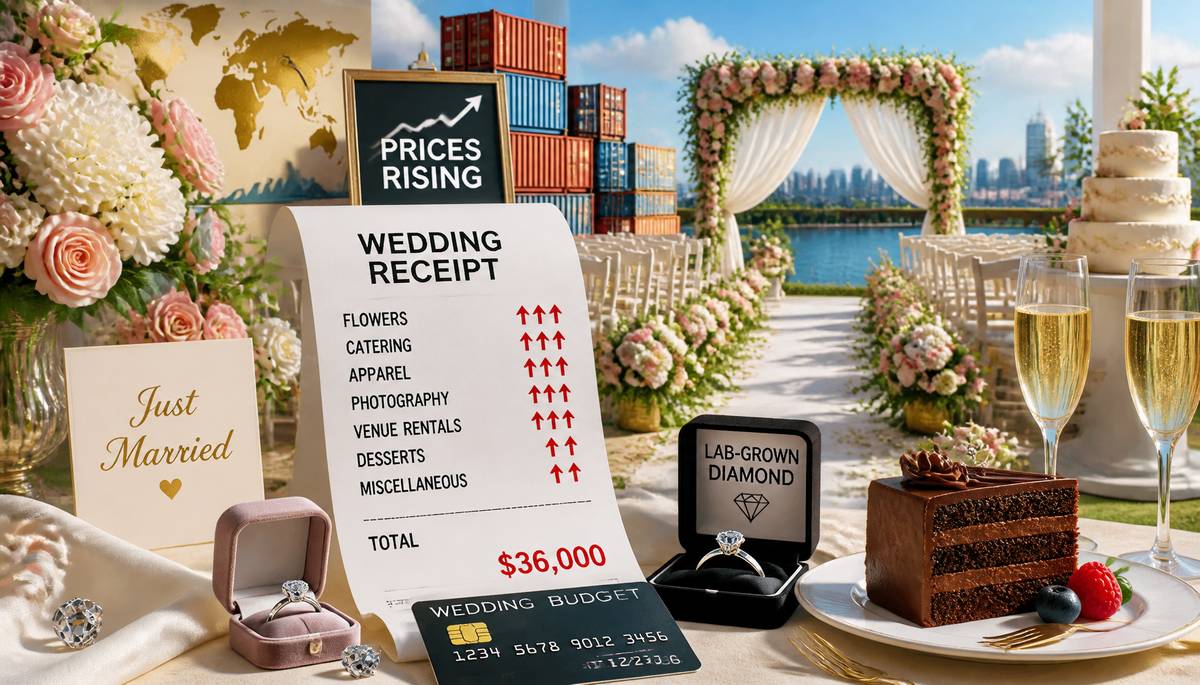 Getting married now can feel less like floating down an aisle and more like watching receipts bloom. Wedding spending rose 8.5% this year from a year earlier, as tariffs and stubborn inflation made the usual symbols of devotion—flowers, catering, apparel, photography, venue rentals—costlier.
In May, annualized inflation reached 4.2%, the highest in more than three years, adding another layer of expense to a ritual already priced like a durable good. The average wedding in 2025 cost $36,000, up $3,000 from 2024, using Zola data cited by Bank of America. The institute’s estimate drew on credit- and debit-card purchases and bank transfers tied to wedding categories.
Some of the increase is simply the price of things becoming more themselves, only pricier. Tariffs have lifted costs for imports such as flowers and cocoa, which turns up later in chocolates and desserts, and businesses tend to hand at least part of that bill to couples.
The geography of matrimony is uneven. In the South, wedding spending grew five times faster than in the Midwest, a split that may reflect local costs or different ideas of what a wedding should look like.
There is also a generational handoff underway. Gen Z weddings have tripled since 2019, while millennial weddings have fallen about 20%. Even tradition is adjusting: more couples are choosing lab-grown diamonds, a quieter sparkle with a smaller price tag.
Posted on 2 July 2026
Ed Sheeran and Martin Garrix Turn a Chicago Wedding Into a Headliner Moment
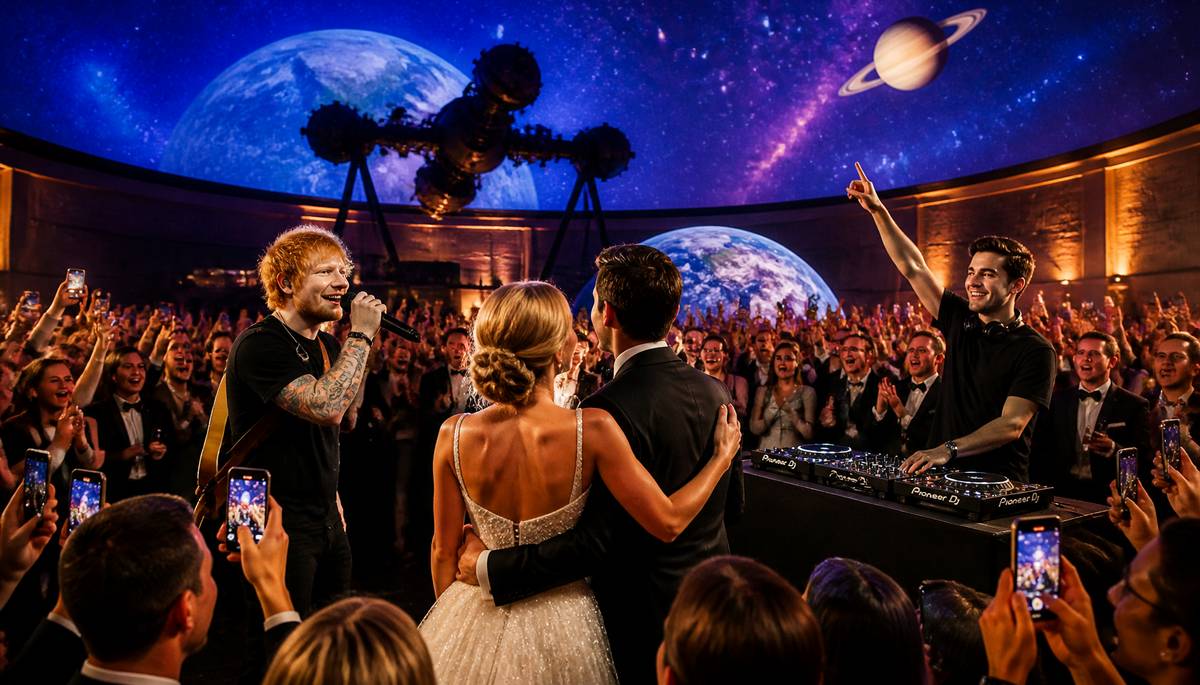 Chicago got the kind of wedding flex that makes every other reception look like a Costco sheet cake with regret.
After separate Saturday performances, Ed Sheeran at Soldier Field and DJ Martin Garrix at Northerly Island, the two kept the night going by showing up unannounced at the wedding of Tessa Kindelin and Brendan Harty at Adler Planetarium.
The stunt started with a social media direct message. Mike Kindelin contacted Garrix and asked whether he and Sheeran would crash his sister’s wedding. They agreed, because apparently some people live inside a rom-com with a stadium-budget soundtrack.
Garrix later posted video from the lead-up: the ride across Chicago, a police escort in front, and the groom’s brother grinning beside the two artists on the way to the venue.
Then came the entrance. Sheeran and Garrix walked into the reception to a room that absolutely lost its collective mind as Sheeran’s Repeat It played. Sheeran took the microphone, turning the surprise from celebrity sighting into full event.
The newlyweds were all in, and Sheeran leaned into the moment further by dancing with the couple and performing Perfect, which is almost offensively on-theme for a wedding at a planetarium.
It was a post-show detour, but for one Chicago couple, it became the main event.
Posted on 29 June 2026
In Maine, Even the Proposal Needs a View
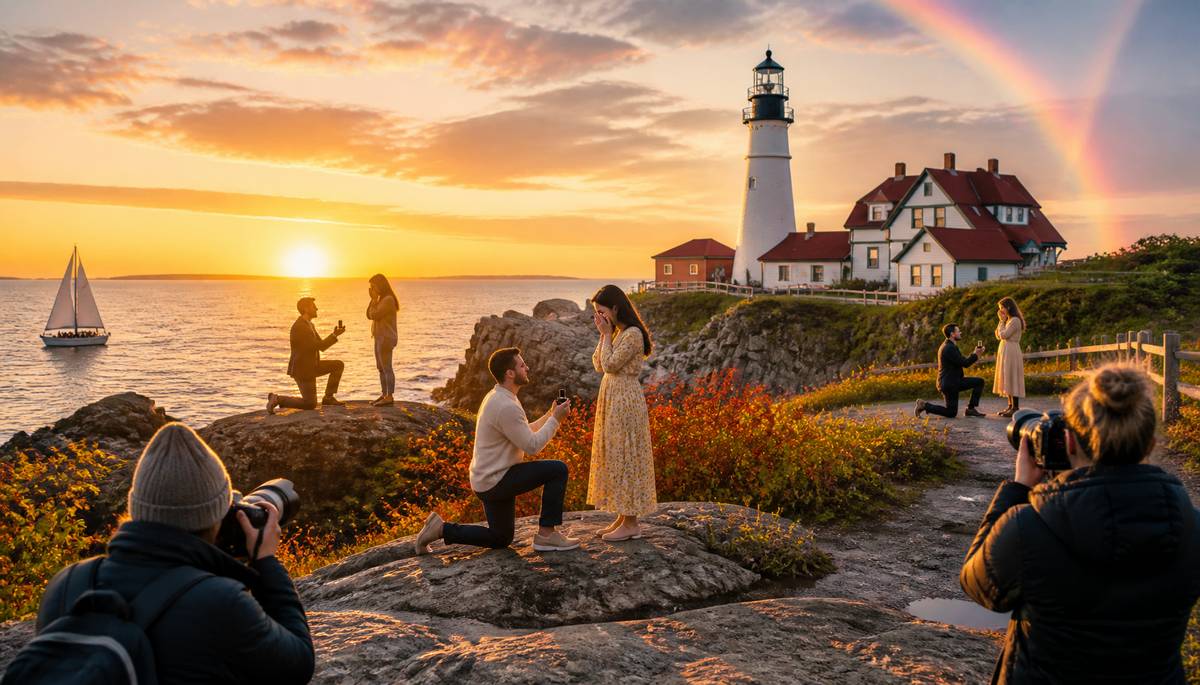 Maine used to be where people came to get married. Now it’s where people come to start the whole hustle.
At sunrise or sunset on Cadillac Mountain, there may be multiple proposals unfolding at once. Around Mount Desert Island, proposal photography has grown fast; Kate Harris of Kate & Keith Photography has spent a decade documenting them, and what once felt rare now has plenty of company.
The pressure is bigger too. Destination proposals rank as the top engagement trend of 2026, according to London agency The Proposers. In Maine, that demand is feeding photographers, planners and innkeepers. Connie Mills of All in One Weddings has handled proposals for 20 years, but says recent ones are more staged. Her Maine- and Florida-based packages run from $350 for photos to $3,000 with a hotel stay, with touches like a red carpet at Portland Head Light or a violinist waiting on a sunset sail.
Portland Head Light and Acadia are the main hotspots for Stacie Summers of SummersCinema, who averages four proposals a month in season and has increased bookings every year since launching in Maine four years ago.
Many couples arrive as tourists first. In fall 2024, Florida couple Dillon and Lindsey Powell got engaged at Otter Point after six years together. Last summer, Quincy, Massachusetts, couple Brian Daly and Mariah James got engaged at Rachel Carson Salt Pond Preserve as rain cleared and a rainbow appeared. Portland photographer Molly Haley booked two proposals in 2024, five in 2025, turned down 18, and already has six this year. Posted on 22 June 2026
Gen-Z’s Weddings Are Growing Larger, Stranger, and More Personal
The wedding trade, that tender republic of florists, bakers, dress shops, caterers, photographers, venues, and little hired marvels, is being carried forward by a generation many underestimated. Raina Moskowitz of the Knot Worldwide says the old assumption is wrong: Gen-Z expects marriage to be part of life, and 86 percent imagine weddings in their future.Even in a strained economy, couples are not readily dimming the lights on the ceremony. The Knot Worldwide’s data shows fewer than half are altering plans because of economic pressure, and eight in 10 believe the expense will prove worthwhile. Budgets hold. Guest lists hold. Weddings, for now, remain strangely durable. That steadiness matters in a U.S. industry Ken Research values at $65 billion, much of it resting in small businesses.
What young couples want in 2026 is less formula, more self-portrait. Bridal white no longer rules unchallenged; dresses touched with color are gaining favor, and bridal runways have gone further, showing rainbow and glow-in-the-dark gowns.
Online taste now travels straight into the reception hall. Gen-Z borrows social media language—old money aesthetic, cottagecore, quiet luxury—to shape décor and venue choices. Taylor Swift’s engagement to Travis Kelce, and the garden images that followed, helped lift interest in garden weddings.
They are also unusually guest-conscious. Money often shifts toward photo booths, portraitists, tattoo artists, or even carnival rides. Some still want 100-plus guests; others choose microweddings to lavish more care on fewer people.
Posted on 16 June 2026
Weddings Keep Their Spark as Couples Spend Carefully
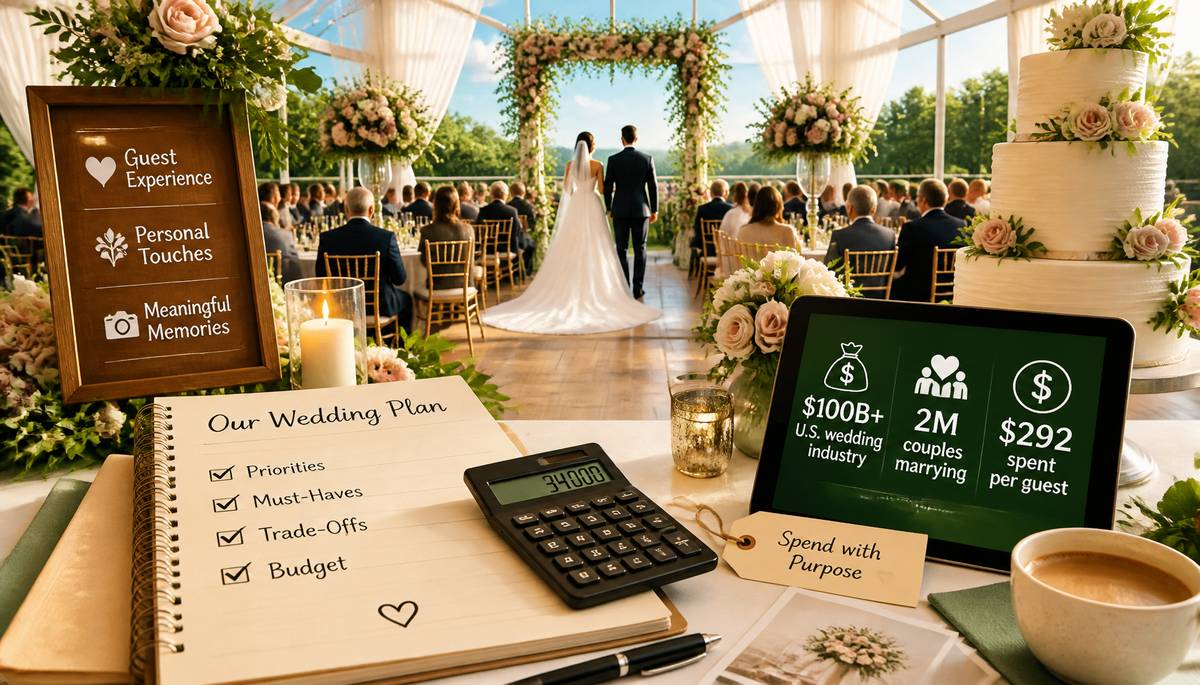 Wedding season has come trundling in again, all ribbons and receipts, and the American wedding business is still a colossal creature. Last year it pulled in more than $100 billion, with about 2 million couples marrying and the typical celebration costing roughly $34,000 nationwide.
Even with steeper prices and a fog of economic unease, the appetite for weddings has not gone soft. The Knot’s Esther Lee says couples are still booking vendors, gathering family and friends, and treating the occasion as money worth spending. Its data suggests weddings remain deeply important: 95% of couples are thankful to celebrate face-to-face, and 80% say the wedding day is the event they anticipate most this year.
But the spending is not mindless. Couples are becoming shrewder, sorting must-haves from pleasant extras and discussing trade-offs early. Catering, music, venue hotels and other costly choices are being weighed with greater care, especially after tariffs became another budgeting complication late last year.
If there is one thing many couples still refuse to skimp on, it is the guest experience. That remains the chief priority in planning, along with making the day feel personal rather than generic. The Knot’s latest figures show spending per guest has risen to $292, an $8 increase from 2024.
The result is a market that is still buoyant, though increasingly disciplined about where every wedding dollar goes.
Posted on 8 June 2026
When the Wedding Vendor Vanishes
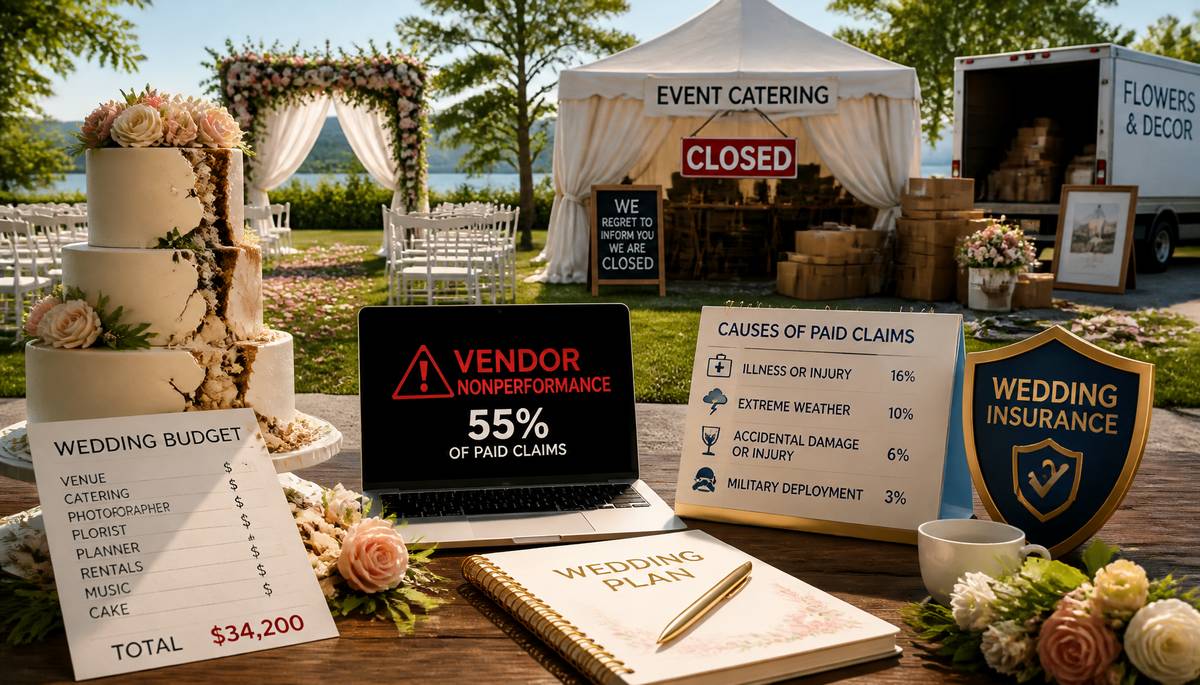 The wedding, once sold as a day of vows and flowers, now looks more like a distributed financial system with weak points. In 2025, vendor collapses or nonperformance triggered 55% of paid wedding insurance claims, according to Travelers, the fifth straight year they led losses and a sharp jump from about 27% in 2024.
Other causes trailed far behind: illness or injury at 16%, extreme weather at 10%, accidental damage or injury at 6%, and military deployment at 3%.
This matters because the average US wedding cost climbed to $34,200 in 2025, based on The Knot’s 2026 Real Weddings Study of more than 10,000 couples. That money is fragmented across venues, caterers, photographers, florists and planners, often paid in deposits long before the ceremony. If one small business fails, the vanished funds can be difficult to recover.
The pressure on vendors is real. Coface reported 6,574 US business bankruptcies in the third quarter of 2025, the highest since Q2 2014 and 15% above the 2019 average. In February 2026, commercial Chapter 11 filings rose 67% year over year to 814, as high costs, interest rates and tighter credit hit smaller operators.
Yet only about 30% of couples buy wedding insurance, according to the NAIC. That leaves most of America’s roughly 2 million annual marriages exposed, even as wedding liability insurance grows from $696 million in 2025 to $731 million in 2026, with forecasts of $1.06 billion by 2032. Posted on 2 June 2026
Bride’s Wedding Pool Jump Became a Warning About the Hidden Danger of Heavy Dresses
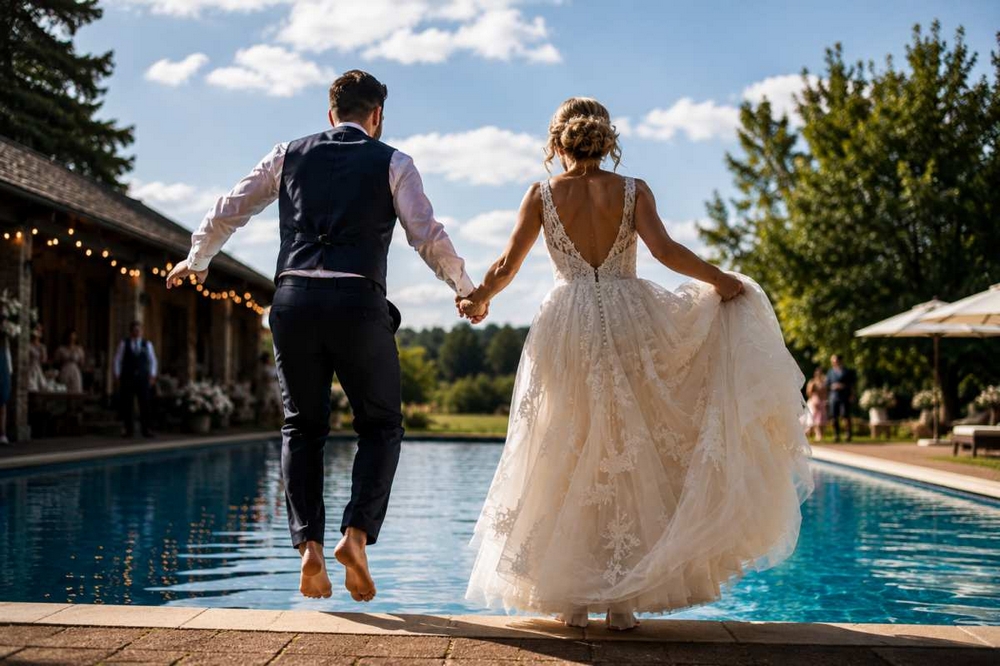 At 30, Shelby Crawford of Chattanooga thought ending her wedding with a pool jump in her gown would be a bit of high-spirited fun. Instead, within seconds of hitting the water beside her husband, Corey Crawford, she could not breathe.
The problem was the dress. Its many heavy layers billowed up over her face and, each time she tried to shove them away, they drifted straight back. What makes the episode more chilling is that dozens of guests were standing nearby and still did not realise she was in trouble. From the edge, distress did not look like distress at all.
After she posted the TikTok, viewers told her that other brides had died in similar situations, something she says she had never known. One widely reported case involved a Canadian bride who drowned in 2012 after entering a river in her wedding gown for photographs.
Crawford had assumed that, because she was not alone, help would be immediate if needed. The incident taught her the opposite lesson: formalwear in water can turn dangerous very quickly, and drowning can happen fast and quietly.
Looking back, she puts the decision down to wedding-day adrenaline and the sort of reckless excitement that also fuels viral videos. Now she wants couples to think twice about such stunts, especially for photos, and offers one practical suggestion above all: change clothes first. She and Corey, she says, were fortunate.
Posted on 1 June 2026
Why the Cost of Saying I Do Keeps Climbing
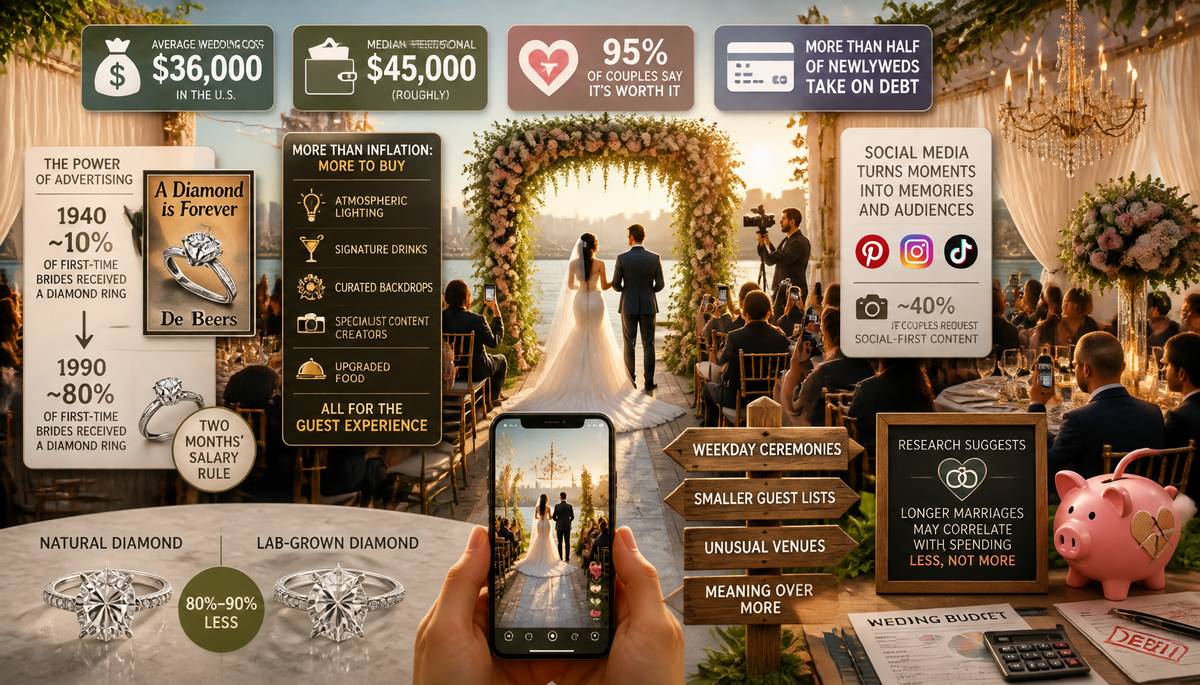 A wedding now costs, on average, about $36,000 in the U.S., according to Zola’s 2025 figures, against a median personal income of roughly $45,000. Yet 95% of couples still say the spending is worth it, even though more than half of newlyweds take on debt.
At the University of Virginia’s Darden School of Business, consumer psychologist Luca Cian argues inflation explains only part of the rise. Some surveys show wedding budgets jumping 30% between 2019 and 2024, well beyond inflation. The difference is not just higher prices, but more things to buy: atmospheric lighting, signature drinks, curated backdrops, specialist content creators and upgraded food, all folded into the idea of guest experience.
Advertising helped build this modern wedding script. In 1940, only about 10% of first-time American brides received a diamond engagement ring; by 1990, after De Beers’ A Diamond is Forever campaign and the two months’ salary rule, the figure was around 80%.
Social media has intensified the pressure. Pinterest, Instagram and TikTok turn ceremonies into both private rituals and public performances; about 40% of couples now request social-first material from photographers.
Cian points to identity, emotion, sunk costs and once-in-a-lifetime thinking as reasons people overspend. There are hints of resistance: lab-grown diamonds cost 80% to 90% less, and Gen Z is more open to weekday ceremonies, smaller guest lists and unusual venues. Research also suggests longer marriages may correlate with spending less, not more.
Posted on 31 May 2026
The Forever Emergency as Family Scheduling Tool
 Donald Trump missed Don Jr’s latest wedding in the Bahamas last weekend, and the official reason was not weather, gout, or paternal awkwardness. It was Iran.
He had signaled he might try to attend, then pointed to government circumstances and devotion to the United States. In the Oval Office, he also framed the decision as unwinnable: attend and get killed, skip it and get killed. He plainly meant criticism, not assassination.
That tells you something useful about the present arrangement. The administration keeps insisting an Iran agreement is close, with a solid proposal on the table and arguments now reduced to wording in an initial document. Meanwhile Iran has laid mines in the Strait of Hormuz, voiced resolute support for Hezbollah, and described the two sides as both very close and very far. The promised quick finish has drifted into the familiar swamp.
This conflict, largely self-started, is already producing civilian deaths, deeper regional instability, and an energy shock whose larger effects are still arriving. Yet for Trump it also serves as a marvelous permanent excuse, the kind that can be rolled out for weddings, and perhaps for future birthdays, graduations, bar mitzvahs, and the rest of family life.
Asked about his son’s new wife, Bettina, Trump called her a person he had known for a long time and said, with detectable caution, that he hoped they would have a great marriage. Posted on 27 May 2026
A Mass Wedding Offers Gaza a Brief, Defiant Moment of Hope
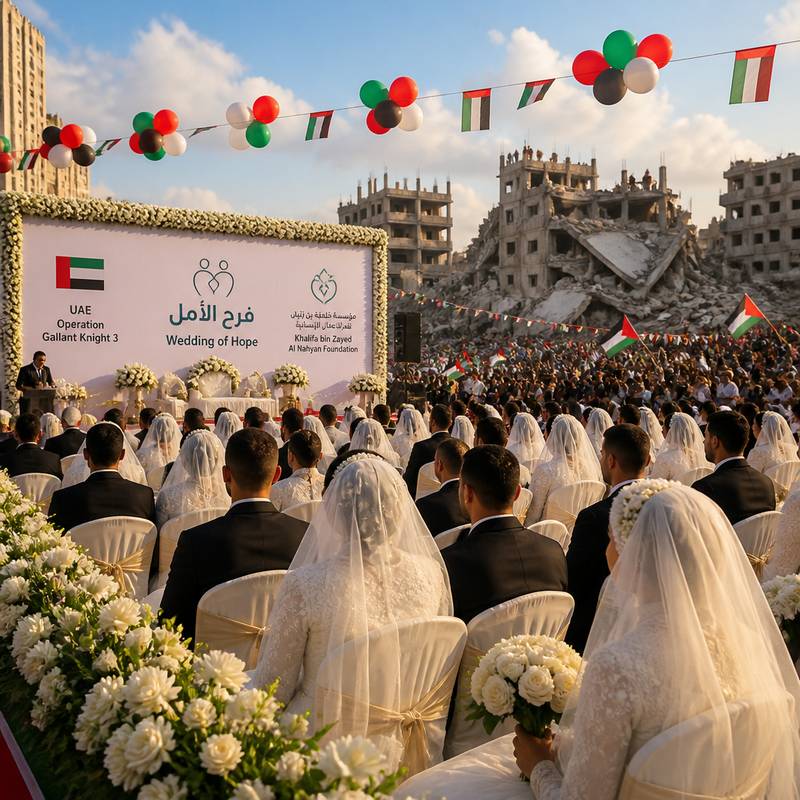 In Deir al-Balah, 300 couples celebrated a joint wedding in what was billed as Gaza’s biggest mass marriage ceremony so far, turning one afternoon into a rare display of joy after months of devastation. Nearly 2,000 people entered the draw, and the selected couples took part in an event funded by the Khalifa bin Zayed Al Nahyan Foundation through the United Arab Emirates’ Operation Gallant Knight 3, a humanitarian effort aimed at supporting Palestinians in Gaza.
For many of the newlyweds, including bride Thekra al-Masri, the gathering represented something larger than a ceremony: a glimpse of normal life and the possibility of change for families uprooted by war.
That sense of hope exists alongside extreme fragility. A ceasefire has been in place in Gaza since last October, but it remains uncertain. The war began after the 7 October 2023 Hamas-led assault on southern Israel, in which about 1,200 people were killed and 251 taken hostage.
Israel’s ensuing military campaign in Gaza has killed more than 72,560 people, according to the territory’s health ministry. Violence has continued during the truce. On 23 April, medics and first responders said two Israeli strikes in Gaza killed at least eight Palestinians, including three children.
The Israeli military said one strike targeted a person it described as a terrorist near the Yellow Line, the area held by Israeli forces, after troops faced an immediate threat. Hamas said the killings damaged ceasefire efforts.
Posted on 25 May 2026
A Wedding Invitation Should Not Resemble an Invoice
 A wedding is supposed to confirm love, not test whether Auntie Sheila can finance it.
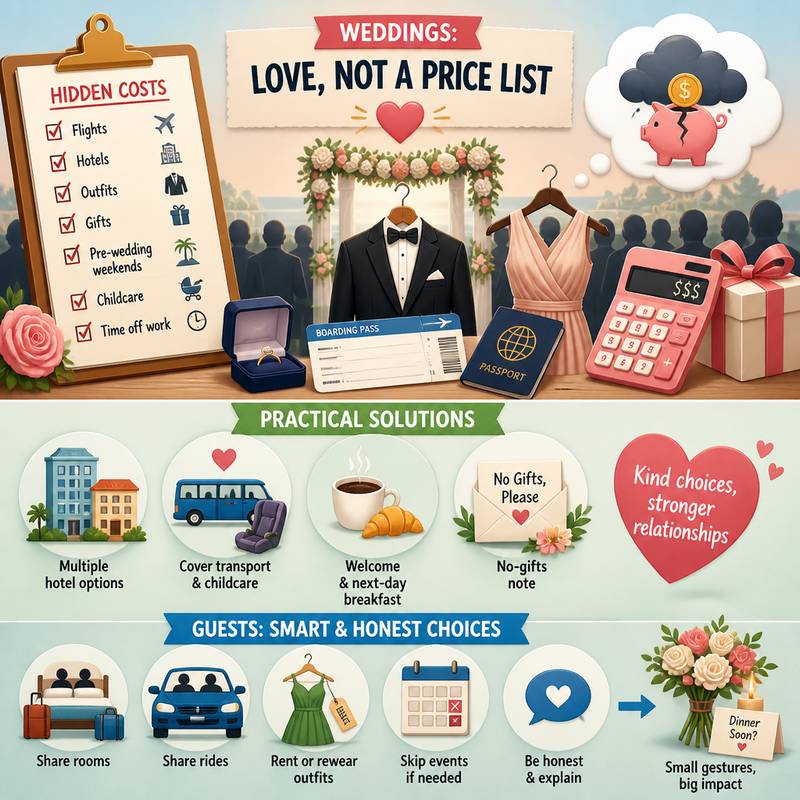
Yet modern ceremonies often come with a stealth price list: flights, hotels, outfits, gifts, pre-wedding weekends, childcare and time off work. Therapists and wedding advisers say those costs can quietly damage otherwise healthy friendships and family ties, especially when couples overlook how unevenly money and paid leave are distributed.
Christine Hargrove, assistant director of the Love and Money Center at the University of Georgia, sees money strain spilling into wedding-party relationships in particular. Being asked to stand beside a couple can feel flattering until the bachelor trip is abroad, the tux must be rented and professional hair and makeup are effectively compulsory.
Practical fixes exist. Wedding consultant Sarah Schreiber suggests reserving more than one hotel option, at different price levels. Pittsburgh planner Cassie Horrell recommends absorbing guest costs where possible: transport to the venue, childcare for adults-only celebrations, or a breakfast the next morning. Rachel Lawrence of Monarch Money says a no-gifts note can also ease pressure.
Guests, meanwhile, need not martyr themselves. Esther Lee of The Knot suggests sharing rooms, rides and other travel costs. Chelsea Hodl of Domain Money says it is perfectly sensible to skip some events rather than incur debt. Rewearing or renting clothes is fine. So is honesty: a clear explanation, plus a small gesture such as flowers or dinner later, often protects the relationship better than strained attendance.
Posted on 24 May 2026
Bride Marries in Dressing Gown to Give Husband a Head Start
 Sometimes the truest wedding outfit is not satin and lace but the thing you wear while looking for the TV remote.
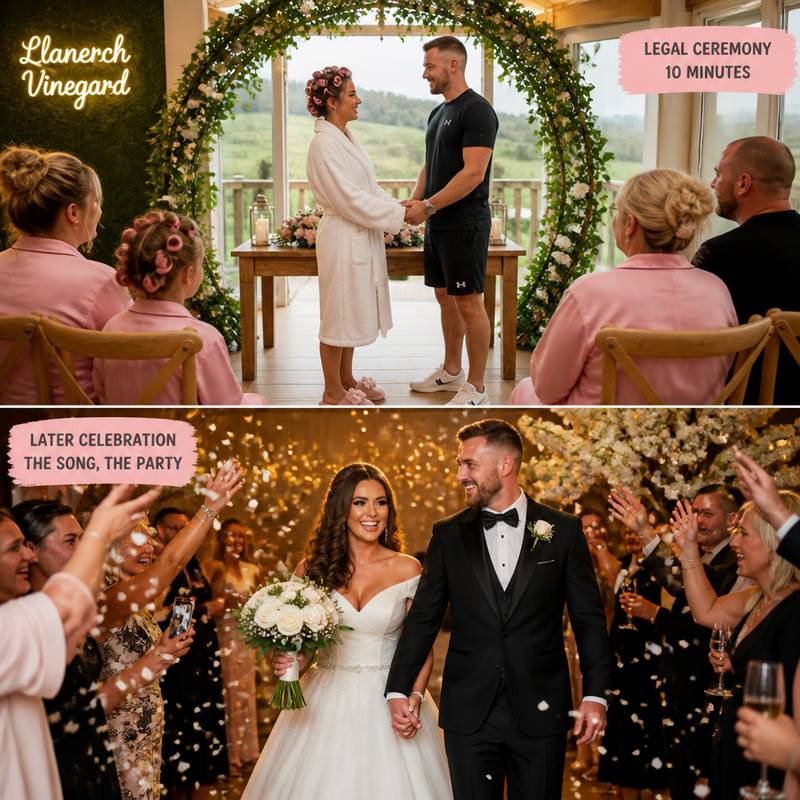
At Llanerch Vineyard in Hensol, Vale of Glamorgan, Ashleigh Stanley, 29, married her childhood sweetheart Jake Stanley, also 29, in a white dressing gown, slippers and hair rollers, with no make-up at all. Jake turned up in a black Under Armour top, shorts and white trainers. The pair, together for 13 years, treated the legal ceremony as a deliberately low-fuss prelude to a larger celebration.
The original plan had been a 150-guest ceremony with Ashleigh walking in to Calon Lân, a hymn loved by her gran. Because it could not be used in a civil service, the couple split the day in two: an intimate legal wedding first, then a celebrant ceremony later where the song could be included.
Ashleigh, from Merthyr Tydfil, decided the first ceremony should show Jake exactly what married life would look like, since pyjamas were how he usually saw her anyway. Her mother, Jake’s mother and Ashleigh’s daughter wore pink bridal pyjamas; their fathers and brothers also went casual. Venue staff said it was their first dressing gown wedding.
The legal ceremony took place on what would have been her gran’s 100th birthday. Later, Ashleigh changed into an off-the-shoulder white gown, with curled hair and full make-up. Guests, she said, loved the brisk 10-minute service because it left more time for the party.
Posted on 22 May 2026
weddingindex.org (c)2009 - 2026